Spaceports, cislunar stations and low-Earth orbit connect people, cargo, knowledge and culture, turning the Moon into a cislunar home port for Mars routes and orbital habitats.
EARTH
CISLUNAR STATION
MARIUS SPACEPORT
DAILY PASSENGER / CARGO / RESEARCH
05 / VISUAL FIELD NOTE
Lunar water, oxygen and components move onward to Earth orbit, Mars routes and orbital habitats.
EARTH–MOON NETWORK / FIELD GUIDE
Do not erase distance. Make movement ordinary.
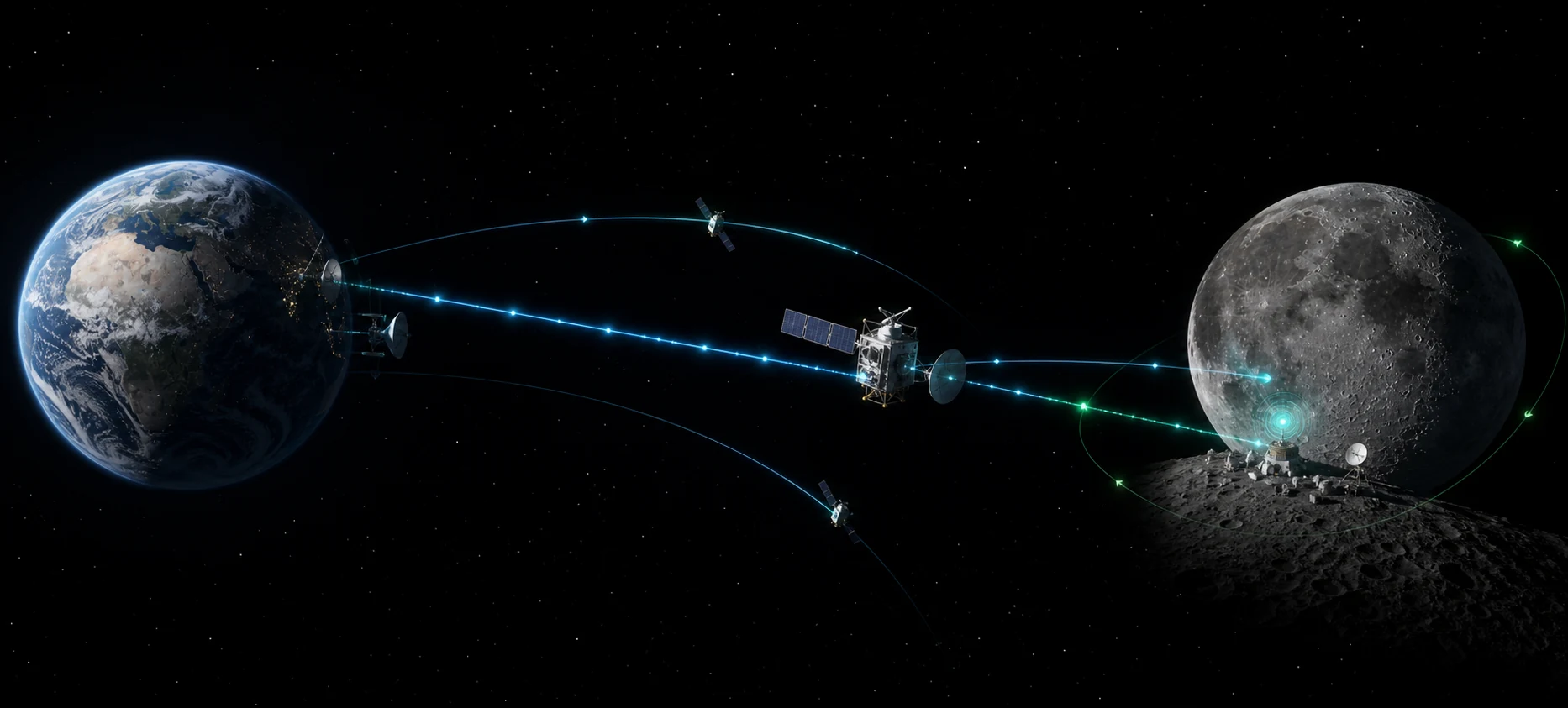
Passenger travel, freight and communication move at different speeds between Earth and the Moon. Marius Arc links those flows to cislunar industry, becoming a home port for the resources, skills and crews that support Mars routes and orbital habitats.
3 LAYERSEARTH · CISLUNAR · LUNAR
2 FLOWSPASSENGERS AND FREIGHT
30 DAYSDISTRIBUTED CRITICAL RESERVE
01
PASSENGER ROUTE
The journey continues after landing.
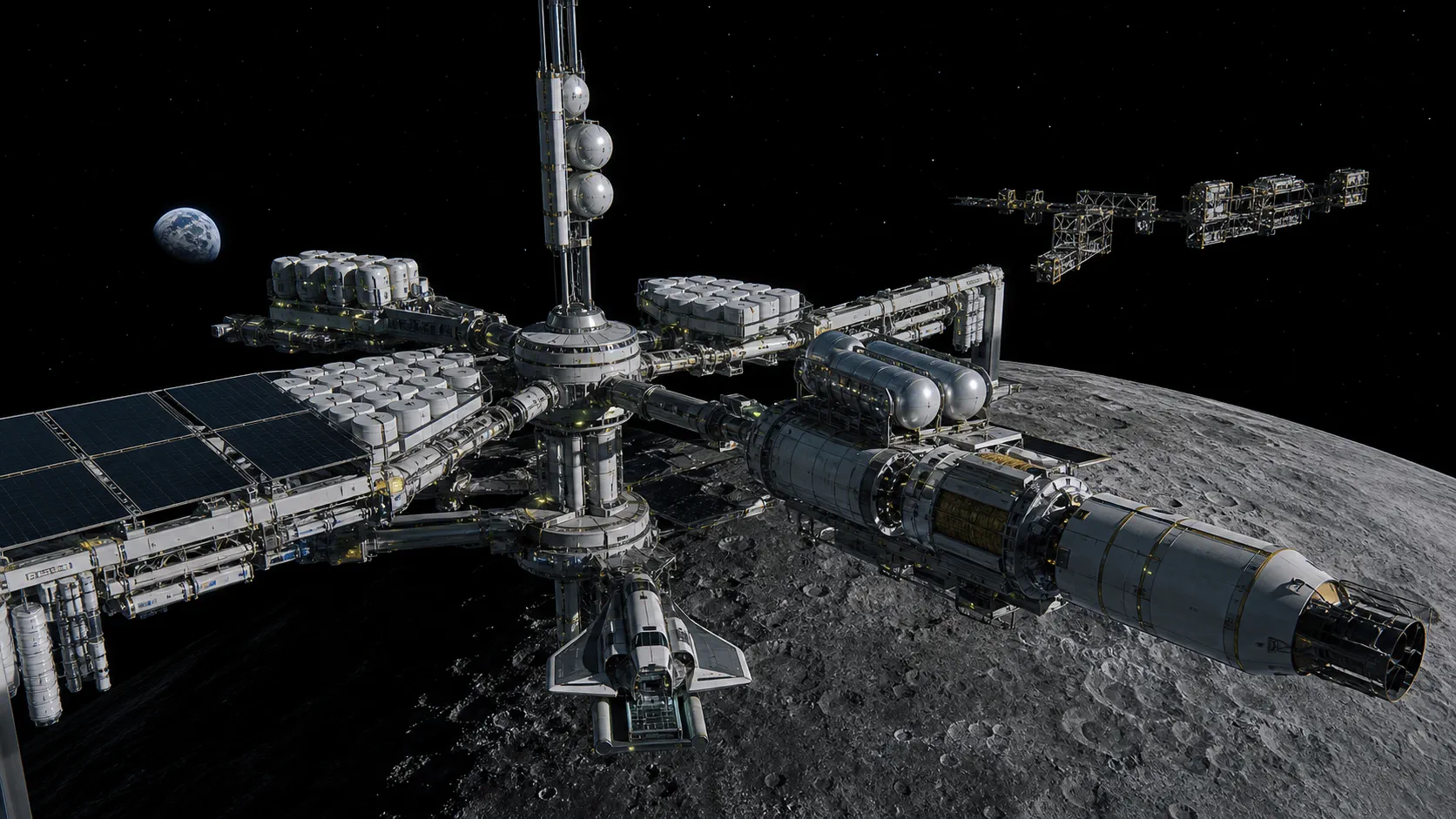
Travellers leave Earth through low orbit, transfer at a cislunar station and board a lunar lander. Not every service flies directly: vehicles, crews and payloads are recombined at transfer points so one grounding does not halt the whole route.
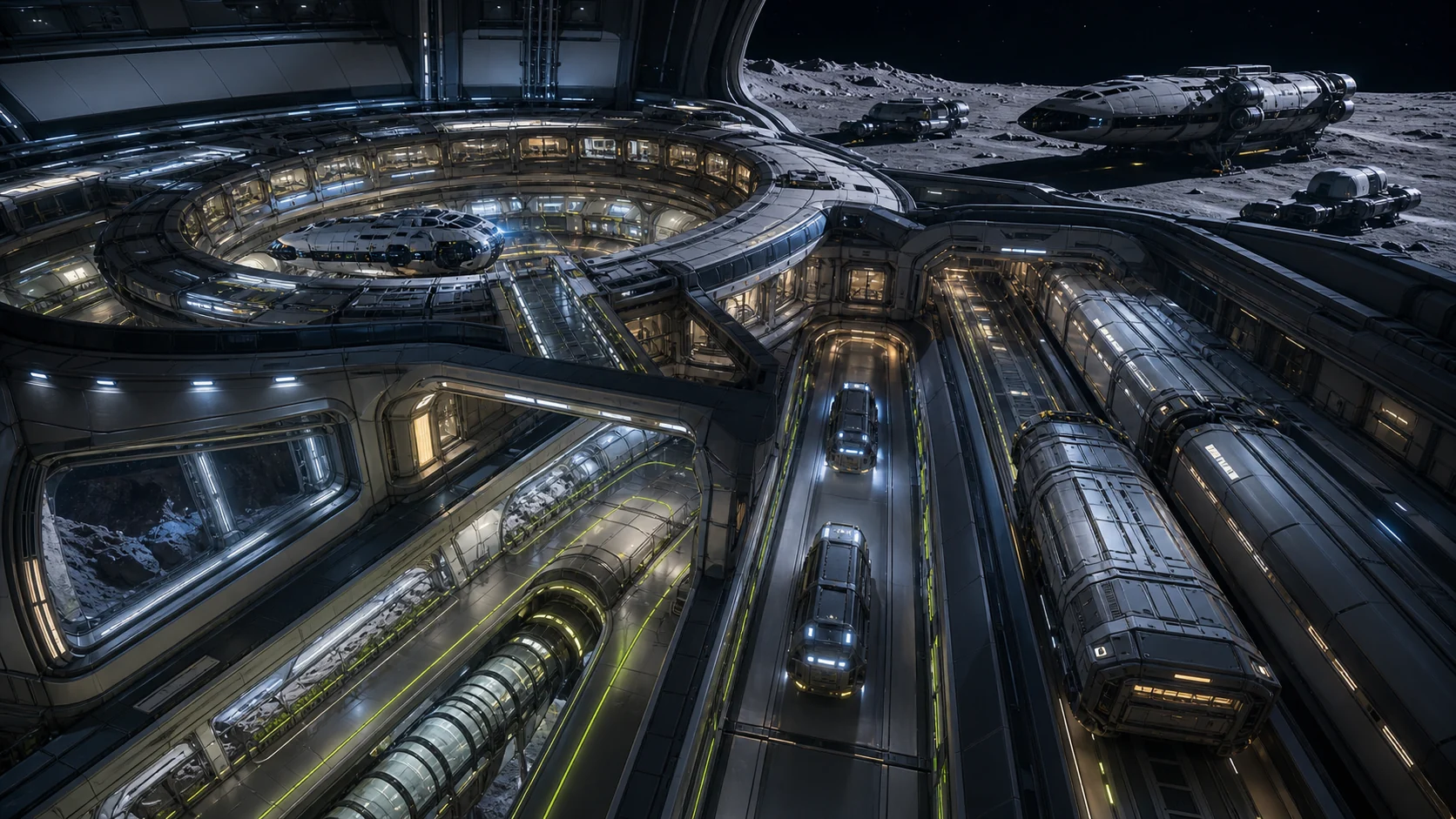
After landing, arrivals pass health screening, baggage handling and low-gravity orientation before entering underground transit at ARC–19. Passenger halls and freight yards stay separate, keeping heavy vehicles and inspection work away from quiet districts.
RECOMBINE SERVICES AT ORBITAL TRANSFERS
CHECK HEALTH AND LOW-G ADAPTATION ON ARRIVAL
CONNECT THE SPACEPORT DIRECTLY TO PASSENGER TRANSIT
02
CARGO CHAIN
Fast cargo and heavy cargo need different ships.
Medicine, electronics, letters and crop genetics prioritise speed; hydrogen, machinery and structural parts prioritise capacity and safety. Cargo is sorted by urgency, temperature, hazard and mass, then assigned to the right orbital transfer.
Lunar scanners inspect sealed containers before they are divided into clean, industrial and quarantine streams. Inside the city, goods use service spines rather than passenger transit. Empty packaging is repaired and reused to reduce return mass.
SEPARATE SERVICES BY URGENCY AND MASS
DIVIDE CLEAN, INDUSTRIAL AND QUARANTINE CARGO
TREAT CONTAINERS AS REUSABLE URBAN MATERIAL
VISUAL FIELD NOTE
Fast cargo and heavy cargo need different ships.
03
SIGNAL + CULTURE
Conversation has a pause; culture still moves together.
Earth–Moon signals take roughly 1.3 seconds each way. Conversation develops a different rhythm, while telemedicine and collaborative work divide live control from asynchronous records. Critical systems are never driven directly from Earth; lunar teams retain local authority.
Lessons, films, news and design files synchronise over high-capacity links, while theatres, schools and archives accumulate a culture of their own. Connection is not the replication of Earth, but the continued exchange between two societies.
DESIGN CONVERSATION AROUND SIGNAL DELAY
KEEP CRITICAL DECISIONS ON THE MOON
BALANCE EARTH SYNC WITH LUNAR MEMORY
04
RESILIENT CONNECTION
A delayed flight must not delay the city.
Solar storms, maintenance and launch-site weather interrupt transport. Air, water, power, medicines, crop genetics and critical parts are stocked against interruption time rather than optimistic arrival dates. Thirty-day reserves are split among several districts.
When a passenger service is cancelled, accommodation, care, work and family contact move through one support system. Network strength is measured less by best-case speed than by how calmly the city absorbs delayed people and goods.
DISTRIBUTE RESERVES FOR TRANSPORT INTERRUPTIONS
MAKE LIFE SUPPORT INDEPENDENT OF ARRIVALS
INCLUDE DISRUPTED DAILY LIFE IN OPERATIONS
05
BEYOND THE MOON
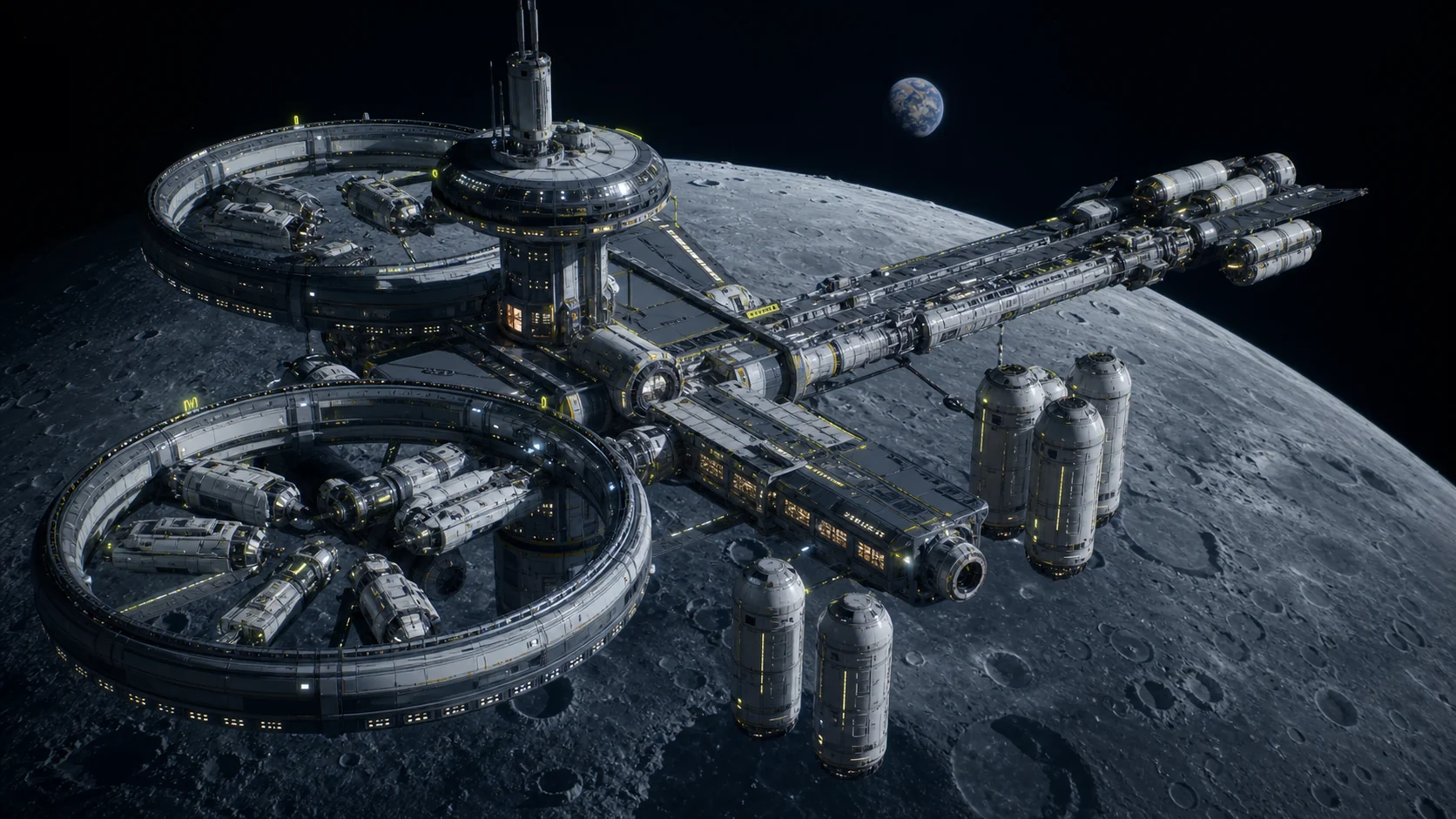
The Moon becomes a home port, not the end of the route.
Not every passenger bound for Mars descends to the lunar surface. Large interplanetary ships are assembled and serviced in cislunar space, where crews arriving from Earth meet water, oxygen and replacement parts launched from the Moon. The Moon is not a compulsory detour; it is the logistics base for heavy supply.
Marius Arc accumulates lived experience in closed ecosystems, low-gravity health, food production and autonomous failure response. That knowledge feeds crew training and mission design, allowing an operating city on the Moon to support the next inhabited worlds.
ASSEMBLE AND SERVICE INTERPLANETARY SHIPS IN CISLUNAR SPACE
SUPPLY LUNAR WATER, OXYGEN AND PARTS TO ORBIT
TRANSFER URBAN OPERATIONS EXPERIENCE TO MARS ROUTES
VISUAL FIELD NOTE
The Moon becomes a home port, not the end of the route.