← ALL SECTORS

08 / Take the concept down to the systems of daily life.

Take the concept down to the systems of daily life.

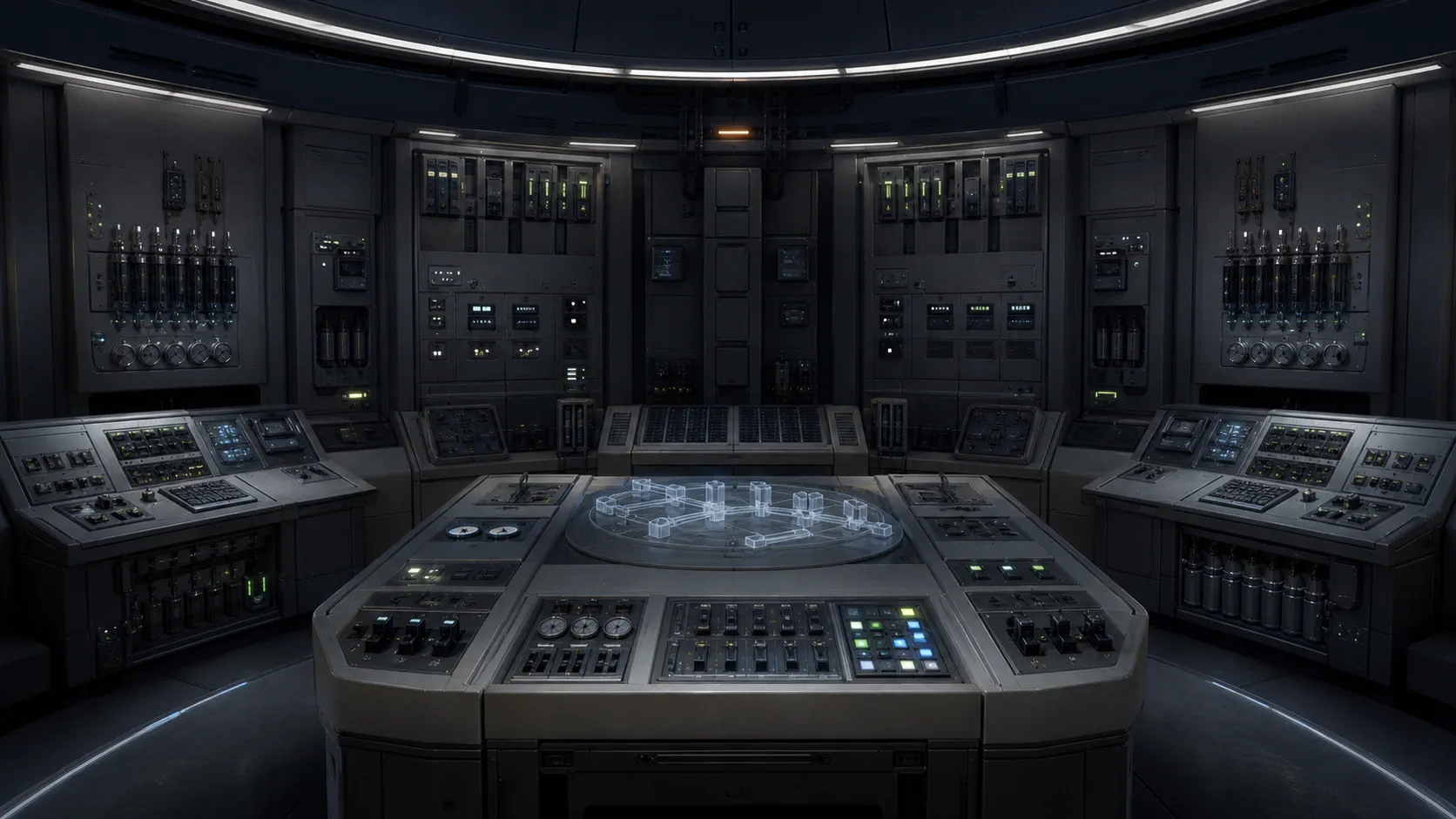
Unoccupied lunar city control room with redundant physical panels and a district model
08 / VISUAL FIELD NOTE

Control is distributed across redundant physical systems and local district authority, not concentrated on one screen.

08 / CITY OPERATIONS

Take the concept
down to the systems of daily life.

Buildings alone do not make a city. These six chapters explain how Marius Arc operates every day, contains failures and remains liveable across generations.

01

CITY / URBAN OPERATIONS

Support 100,000 people through small neighbourhoods.

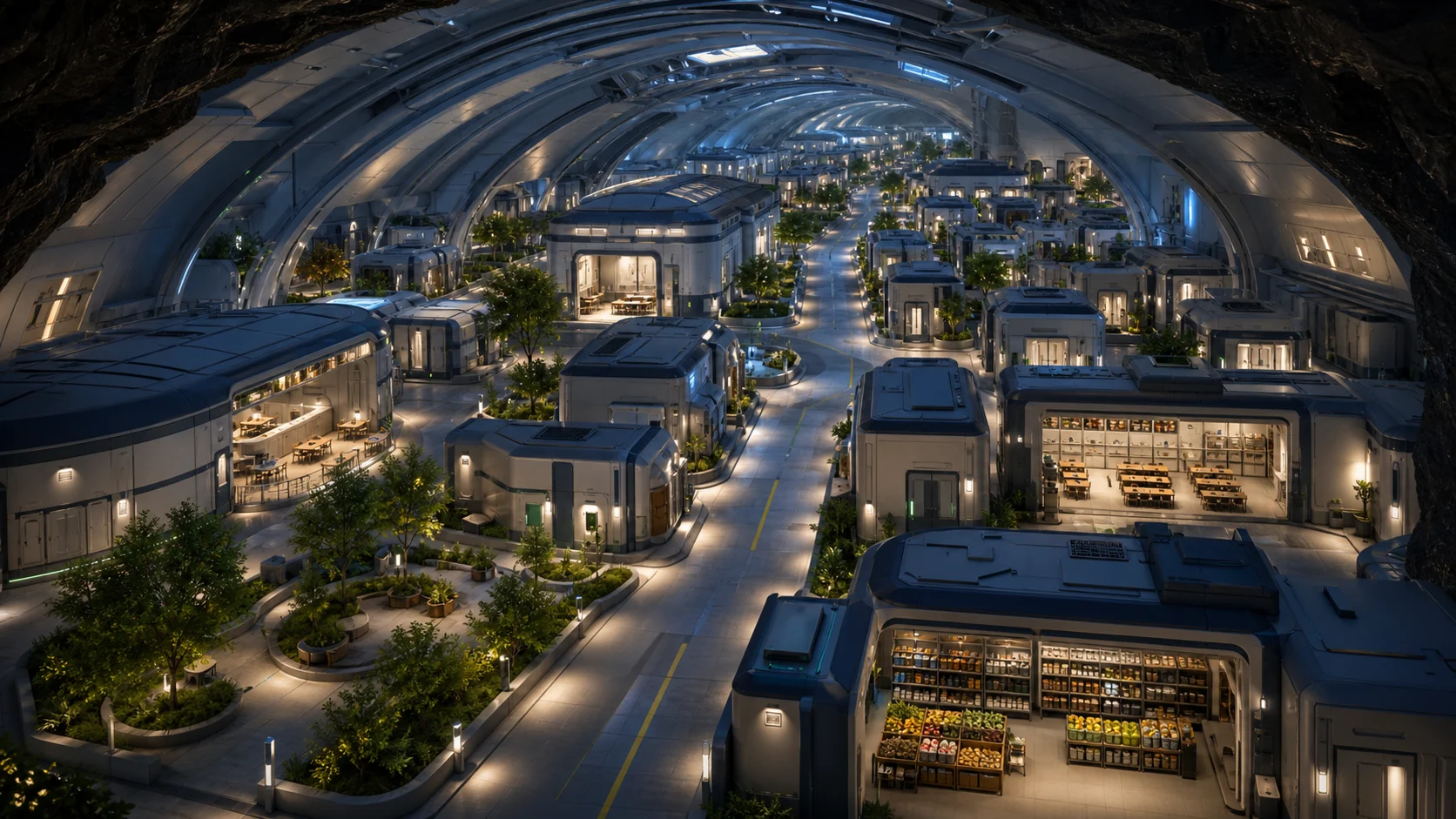
Marius Arc does not place 100,000 people in one enormous room. Residential blocks of roughly 400 to 800 people form the basic unit, with schools, clinics, shared kitchens, laundries, repair shops and planted gardens within walking distance. Most errands fit inside a fifteen-minute range; trunk transit is reserved for commercial districts and the spaceport.

Each block can isolate behind airtight bulkheads without becoming closed in daily life. Circular passenger routes, back-of-house logistics and public squares overlap, while emergency plans can separate people from freight. Local councils decide shared-space rules and service priorities, making residents participants in city operations.

NEIGHBOURHOOD
400–800 PEOPLE
DAILY RANGE
15 MINUTES
URBAN NETWORK
18 MINI COLONIES
02

LIFE / DAILY CULTURE

Live an entire lifetime on the Moon.

Food is designed for pleasure as well as nutrition. Greenhouse vegetables, mushrooms, algae, fermented proteins and cultivated meat become bread, noodles, soups, side dishes and sweets. Convenience stores carry single-meal packs and reusable trays, reducing household refrigeration and waste while increasing everyday choice.

Schools teach lunar materials, plants, maintenance and low-gravity physiology alongside Earth history. Parks and sports turn one-sixth gravity into play, while medicine follows growth, pregnancy and ageing over decades. Birth, education, work, care and remembrance must all exist before the Moon can be called home.

FOOD BUFFER
30 DAYS
COMMUNITY CARE
24 HOURS
LOCAL GRAVITY
1/6 G
Live an entire lifetime on the Moon.
VISUAL FIELD NOTE

Live an entire lifetime on the Moon.

03

WORK / LUNAR PROFESSIONS

Jobs beyond astronauts complete the city.

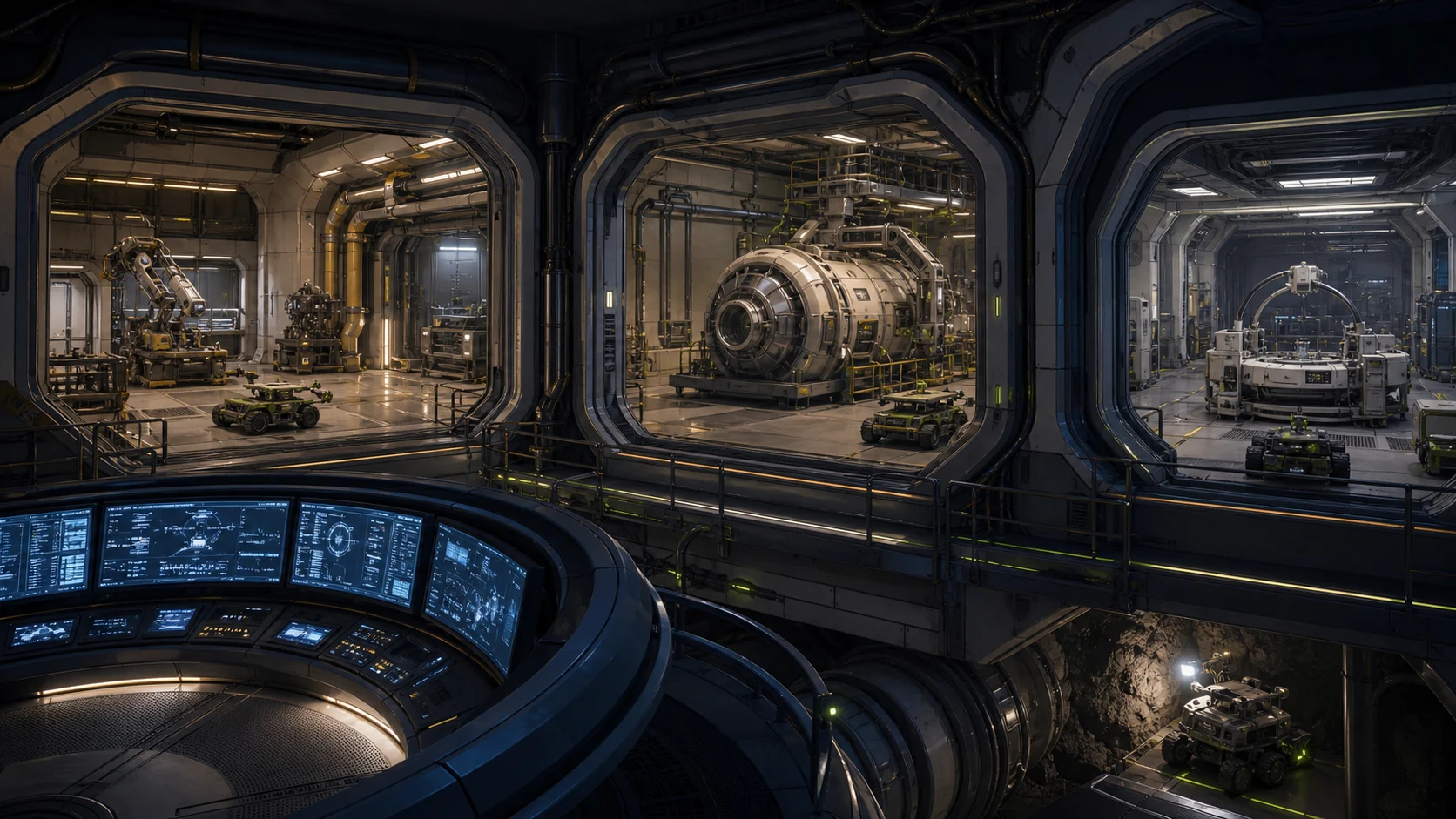
Life support, the spaceport, power and mining require three-shift supervision. Yet teachers, nurses, cooks, carers, designers, theatre technicians, cleaners, couriers and sports coaches sustain most of urban life. Robots take hazardous tasks, while judgement, teaching and care remain human professions.

On the Moon, the ability to diagnose, repair and remanufacture is more valuable than waiting for replacement parts from Earth. Vocational education moves among schools, workshops and employers, with qualifications recognised in both worlds. Shops and cultural work need viable incomes so the economy does not become a single infrastructure industry.

CRITICAL OPS
3 SHIFTS
MATERIAL POLICY
REPAIR FIRST
QUALIFICATION
EARTH + MOON
04

SHELTER / HABITABLE ARCHITECTURE

Turn a cave into the outer skin of a repairable city.

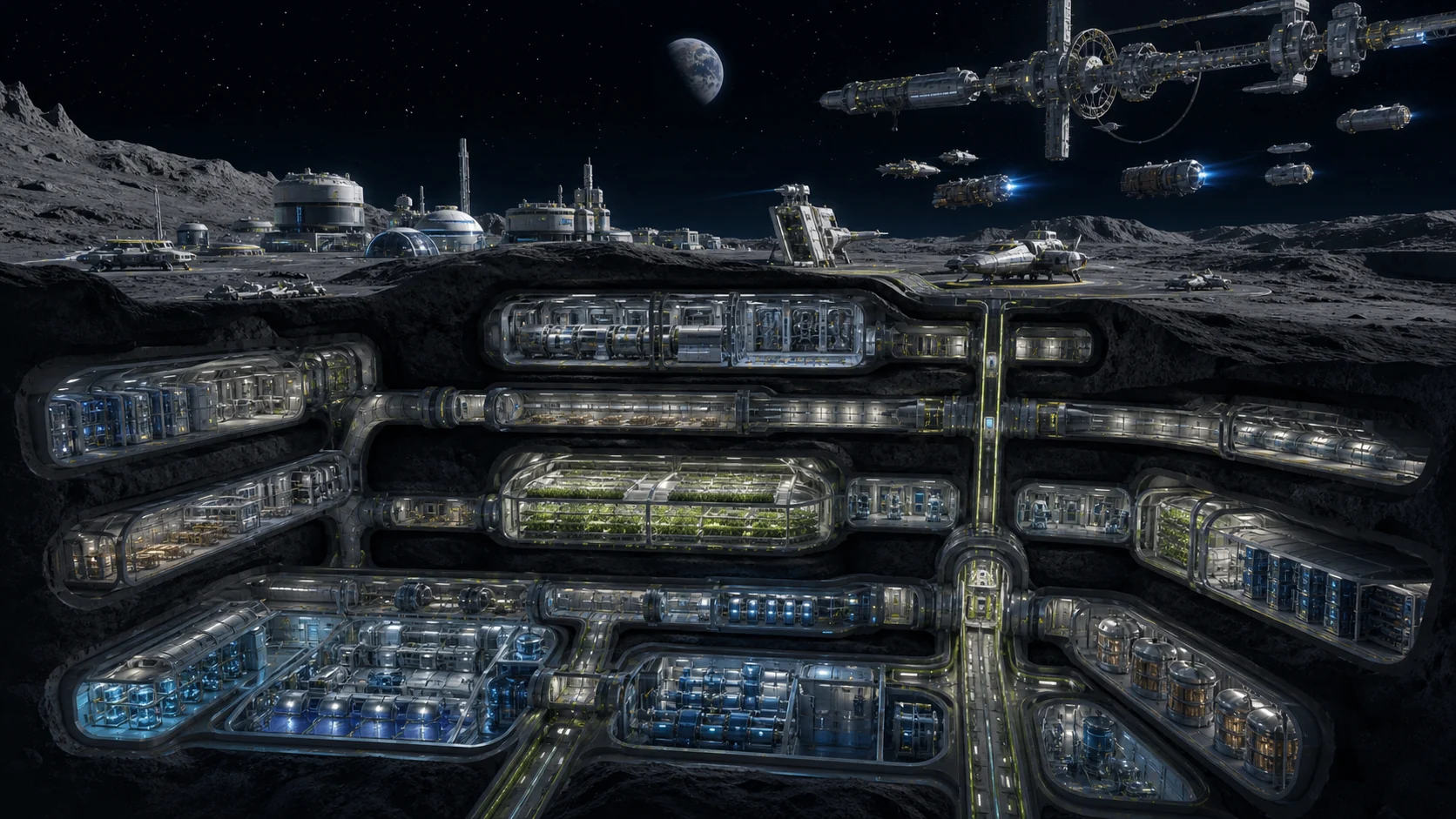
The natural lava tube absorbs radiation, temperature swings and micrometeorites, but it is never the room itself. An independent pressure shell sits inside the rock with insulation, utility layers and replaceable interior panels. Every wall and ceiling people touch can be cleaned, inspected and repaired.

Airtight bulkheads divide habitation into small zones and close automatically during depressurisation. Water, air and power run through service spines behind living spaces, so maintenance does not require demolishing a home. Multiple neighbouring refuge zones prevent one fault from stopping the whole city.

NATURAL SHIELD
HABITATION AT 520–700 m DEPTH
PRESSURE SAFETY
REDUNDANT
MAINTENANCE
SEPARATE SPINE
Turn a cave into the outer skin of a repairable city.
VISUAL FIELD NOTE

Turn a cave into the outer skin of a repairable city.

05

SYSTEMS / URBAN METABOLISM

Recycle continuously while creating new water and reserve capacity.

Wastewater, plant transpiration and air-conditioning condensate are recovered and purified. Leakage, growth and strategic storage still require new supply, so the city processes lunar ice and can synthesise water from oxygen and hydrogen. Drinking, agriculture, industry and emergency reserves use separate quality and priority loops.

Solar fields, storage and fusion divide the power load, with independent emergency circuits for farms, medicine and communications. Waste returns as fermentation feedstock, fertiliser, polymers or building material; only unusable residue is stabilised. The real measure is not recycling alone, but the ability to keep living through a failure.

WATER RECOVERY
98%+ TARGET
EMERGENCY BUFFER
30 DAYS
CRITICAL GRID
N+2 REDUNDANCY
06

CONNECTION / EARTH AND EXPANSION

Build routine Earth travel and the next home at the same time.

Large Earth transports transfer at a cislunar station rather than landing directly. Passengers and cargo continue in separate vehicles: people move from the lunar spaceport into underground transit, while materials enter logistics lines that bypass homes. Study, work, family visits and tourism become ordinary reasons to travel.

Growth does not mean filling one cavity forever. Excavation, pressure shells, life support and public facilities are standardised so small self-sufficient colonies can open in sequence. Each generation uses more lunar metal, glass and ceramic, then connects completed settlements through transport and communications.

TRANSIT
DAILY WINDOWS
PORT FLOW
PEOPLE / CARGO
EXPANSION
REPEATABLE HOME
Build routine Earth travel and the next home at the same time.
VISUAL FIELD NOTE

Build routine Earth travel and the next home at the same time.