Marius Arc links small self-sustaining habitats, then carries lunar 3D printing, construction robotics and standard pressure shells into new lunar districts, orbital colonies and ships built for Mars routes.
01EXCAVATE
02PRINT SHELL
03CONNECT LIFE
04OPEN HOME
06 / VISUAL FIELD NOTE
Manufacture on the Moon, assemble in orbit, and transfer proven lunar-city systems to the next habitat.
CONSTRUCTION SYSTEM / FIELD GUIDE
Build a city that can keep becoming larger.
Construction does not end with excavation. Teams read geology, commission life support and adjust each district after occupancy. Those standards move beyond the next lunar district into orbital habitats and the ships that open Mars routes.
4 PHASESSURVEY TO OCCUPANCY
3 SHELLSROCK · PRESSURE · INTERIOR
24/7ROBOTIC WORK MONITORING
01
SURVEY + ISOLATE
Build the sensor network and escape routes first.
Ground radar, boreholes and microseismic sensors record void geometry, fractures, heat, dust and resources. A glamorous volume matters less than a site that can be monitored for decades and reached from two directions.
Airtight bulkheads isolate construction from the operating city. Personnel, material and emergency paths are established before excavation expands. Building the next district must not stop the air or movement of the district next door.
STORE GEOLOGY IN THE DISTRICT DESIGN RECORD
SEAL CONSTRUCTION AWAY FROM THE LIVE CITY
BUILD MATERIAL AND ESCAPE ROUTES FIRST
02
EXCAVATE + PRINT
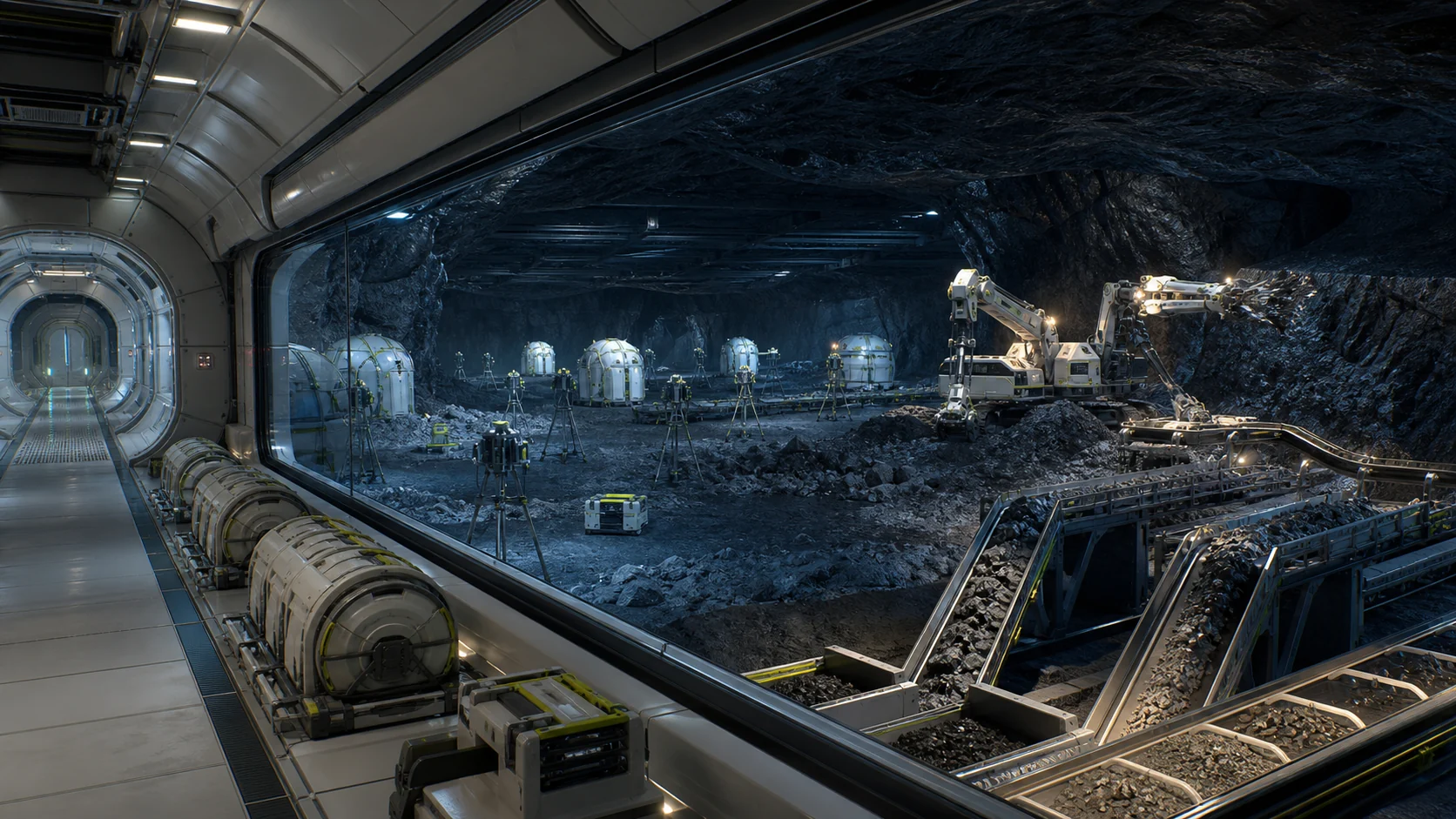
Robots cut rock and sort material at the same time.
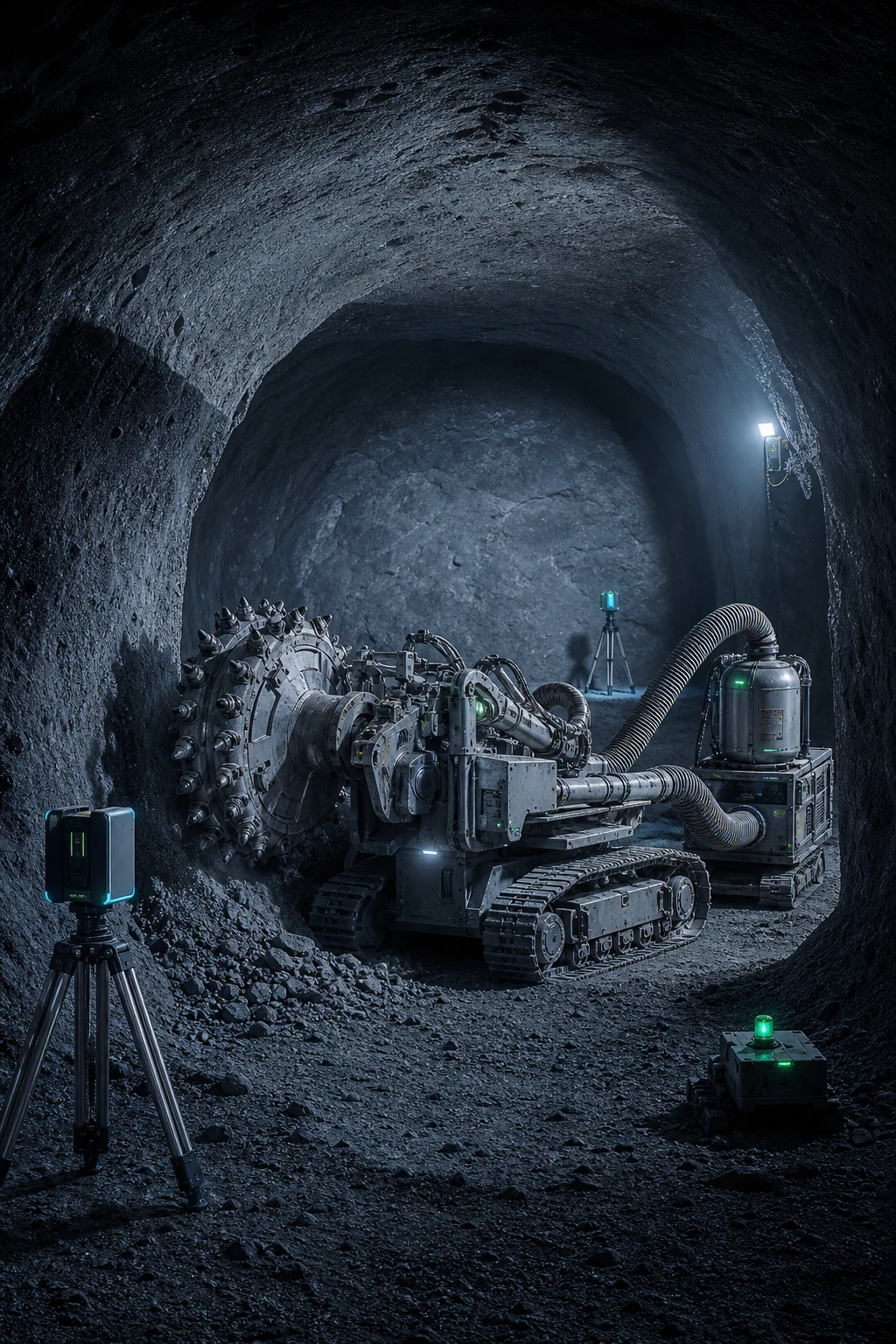
Autonomous excavators capture dust while shaping space, separating rock by grain and composition. Material suited to oxygen extraction, glass, ceramics or shielding is identified and recorded at the workface.
Lunar 3D printing does not mean making everything from one substance. Local material forms supports, protective blocks and subfloors; inspected standard parts remain essential for pressure membranes, valves, wiring and human-facing finishes.
EXCAVATE AND SORT RESOURCES TOGETHER
MATCH LUNAR MATERIAL TO EACH JOB
USE INSPECTABLE STANDARD PRESSURE PARTS
VISUAL FIELD NOTE
Robots cut rock and sort material at the same time.
03
CONNECT LIFE
Test how systems stop before filling them with air.
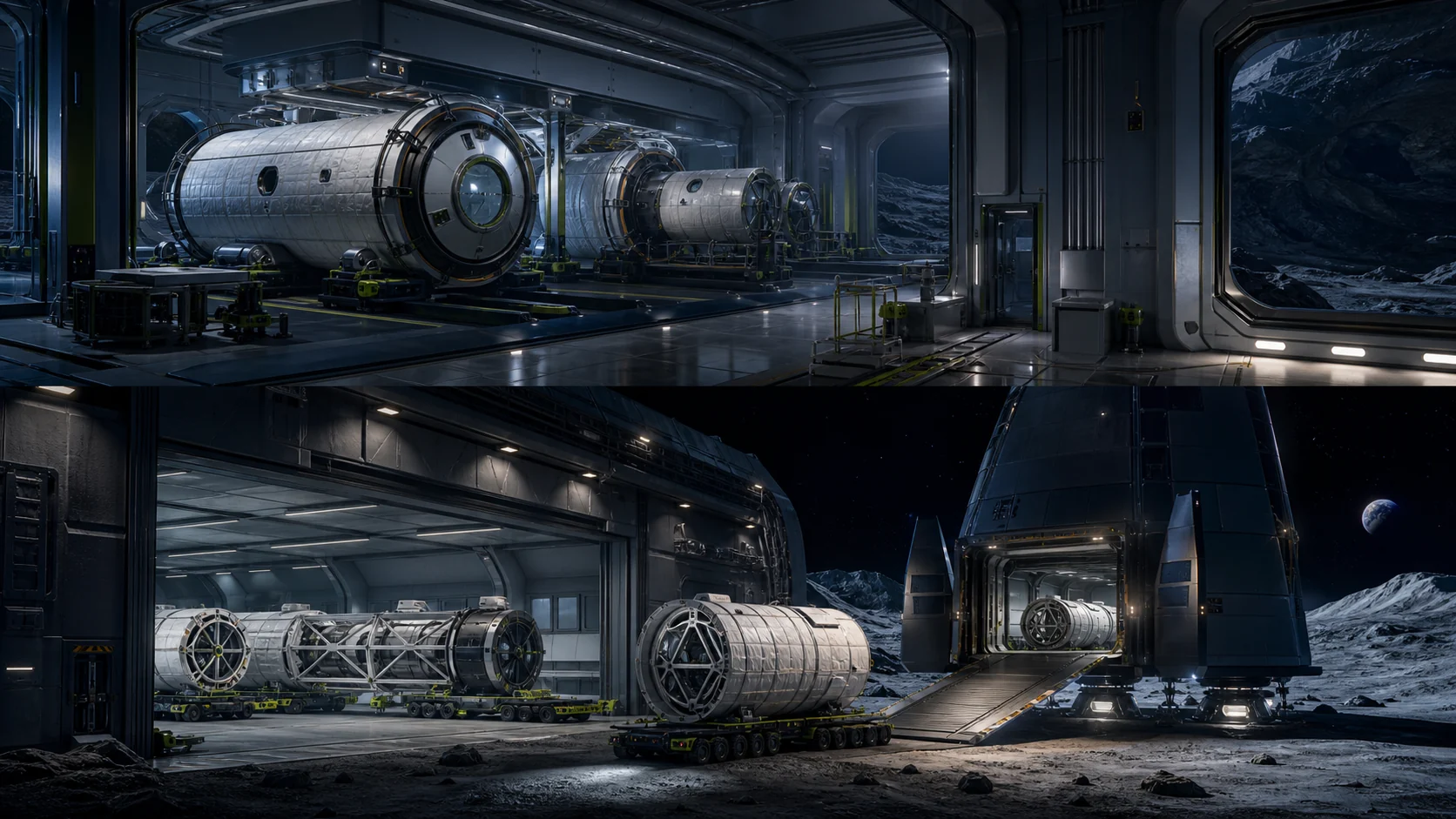
After the pressure shell closes, each section is tested for leaks, deformation, fire, power loss and communication failure. Water, air and power arrive from two directions, proving that minimum life support survives with one side isolated.
Maintenance access, urgent care, refuge rooms and reserves open before schools and homes. A district is ready when its bulkheads close correctly and neighbours can support it—not when the opening ceremony is scheduled.
TEST LEAKS AND SHUTDOWNS BY SECTION
CONNECT LIFE SUPPORT FROM TWO DIRECTIONS
OPEN MAINTENANCE, CARE AND REFUGE FIRST
04
OPEN + LEARN
Occupancy begins the operational test.
Residents arrive in stages. Noise, light, walking time, airflow and shop locations are observed before partitions and transit schedules are adjusted. This period finds the friction that drawings cannot predict.
Results feed the next district. Standard dimensions, work hours and fault records matter, but so do the places residents lost their way, gathered or avoided. Marius Arc expands through learning, not exact duplication.
ADJUST THE DISTRICT THROUGH STAGED OCCUPANCY
TREAT RESIDENT BEHAVIOUR AS DESIGN DATA
FEED EACH LESSON INTO THE NEXT DISTRICT
05
ORBITAL SHIPYARD
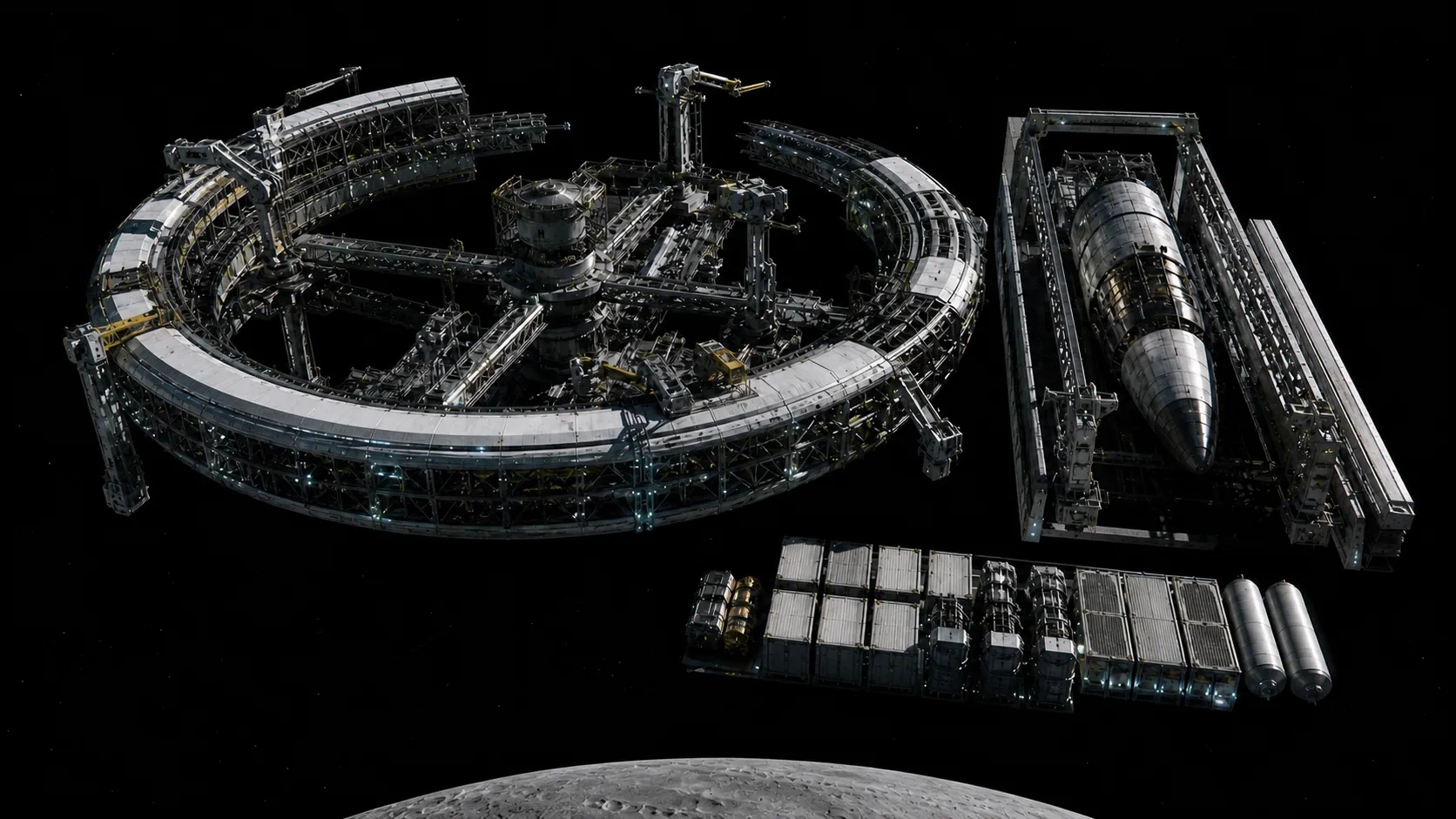
Make on the Moon, assemble in orbit, send to the next habitat.
Lunar refineries extract oxygen, glass, ceramics and metals from rock, forming standard structure, radiation shielding, water tanks and service parts for orbital habitats. Instead of lifting every heavy component from Earth's gravity well, lunar-made parts travel to construction yards in cislunar space.
Pressure compartments, air regeneration, thermal control and food production are proven over years inside Marius Arc before deployment to ships and colonies. The lunar city exports more than hardware: it trains the designers, maintainers and residents who will build the next settlement.
TURN LUNAR RESOURCES INTO STANDARD ORBITAL COMPONENTS
PROVE HABITAT SYSTEMS THROUGH LONG URBAN OPERATION
TRAIN THE PEOPLE WHO BUILD ORBITAL COLONIES AND MARS SHIPS
VISUAL FIELD NOTE
Make on the Moon, assemble in orbit, send to the next habitat.
 01
01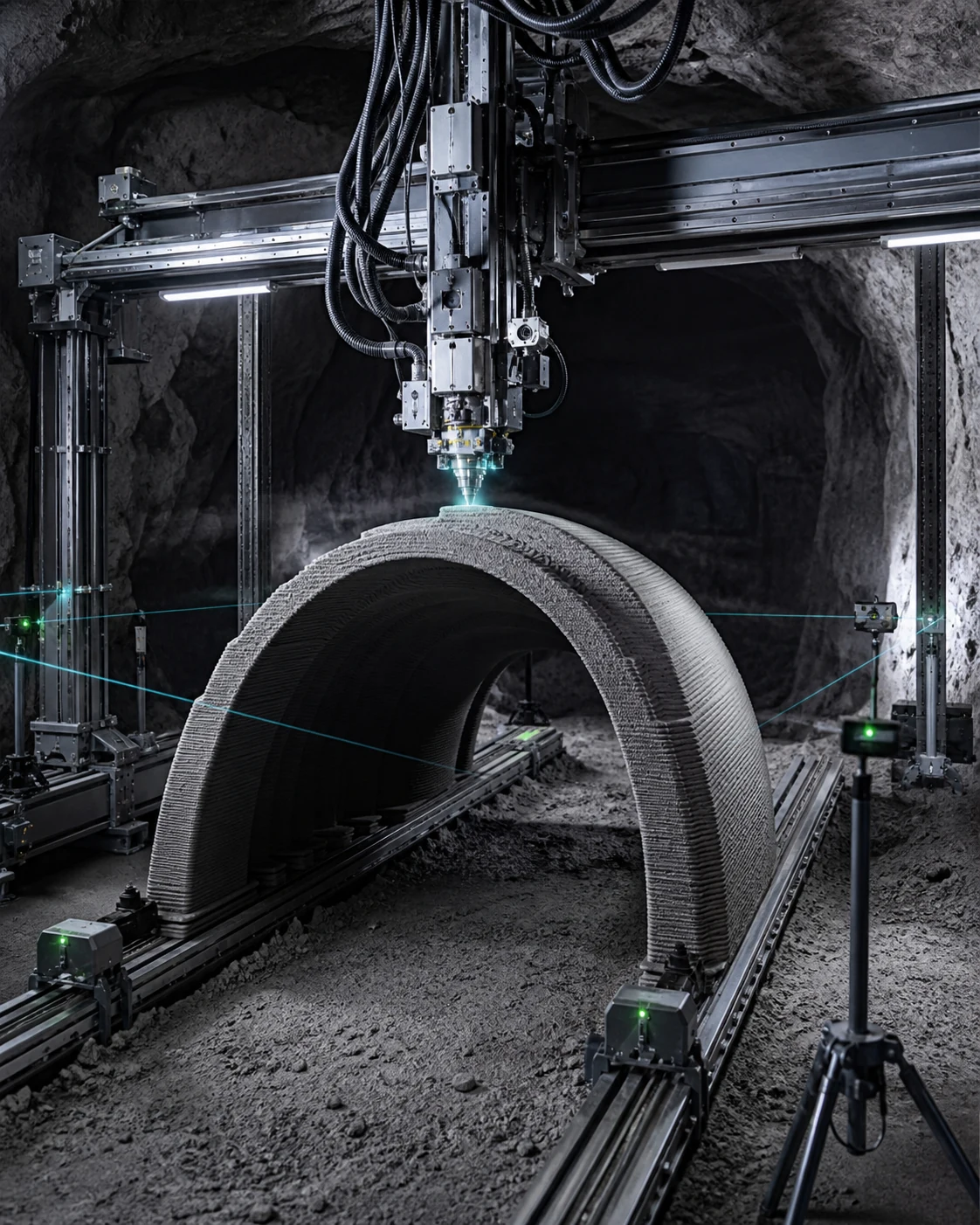 02
02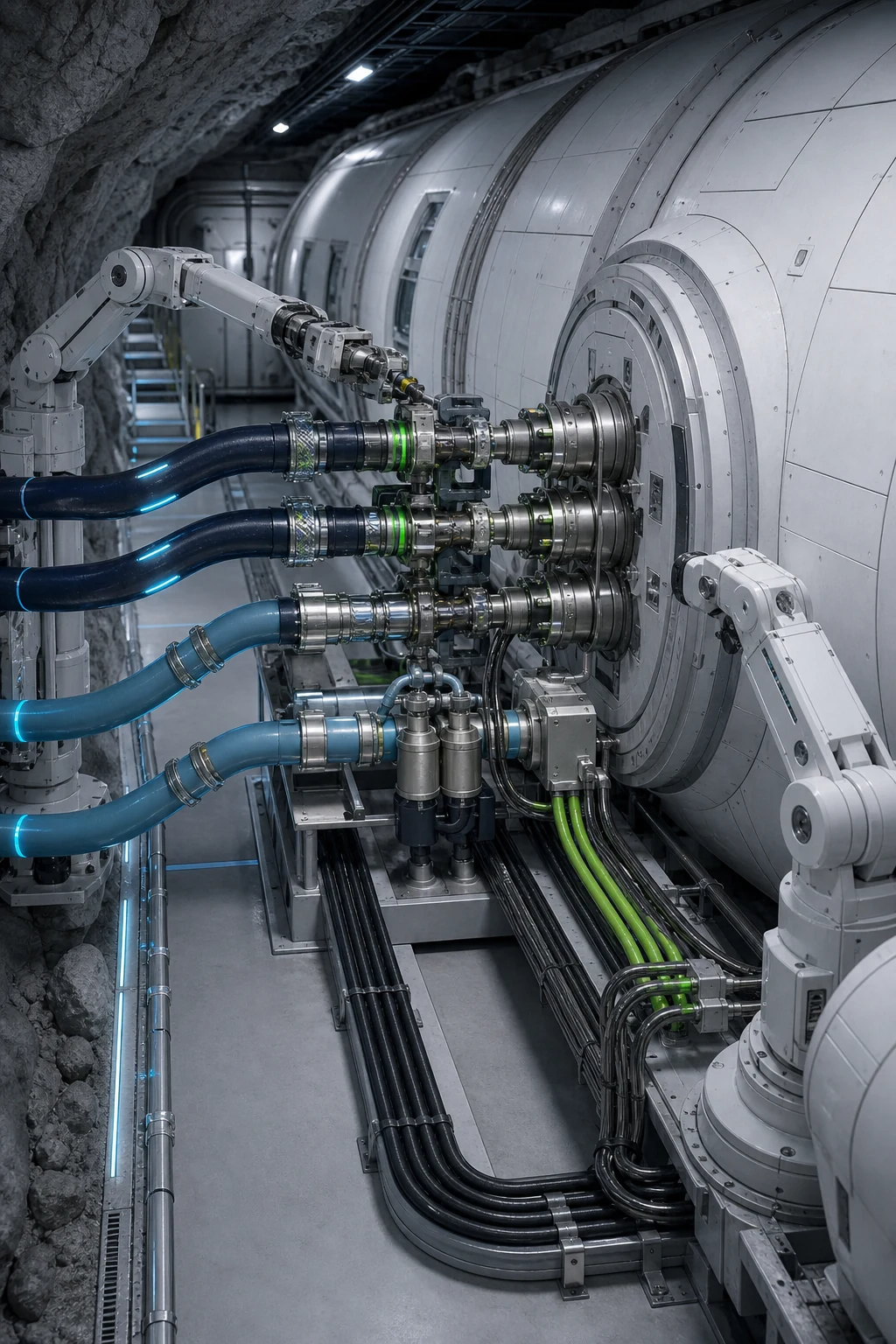 03
03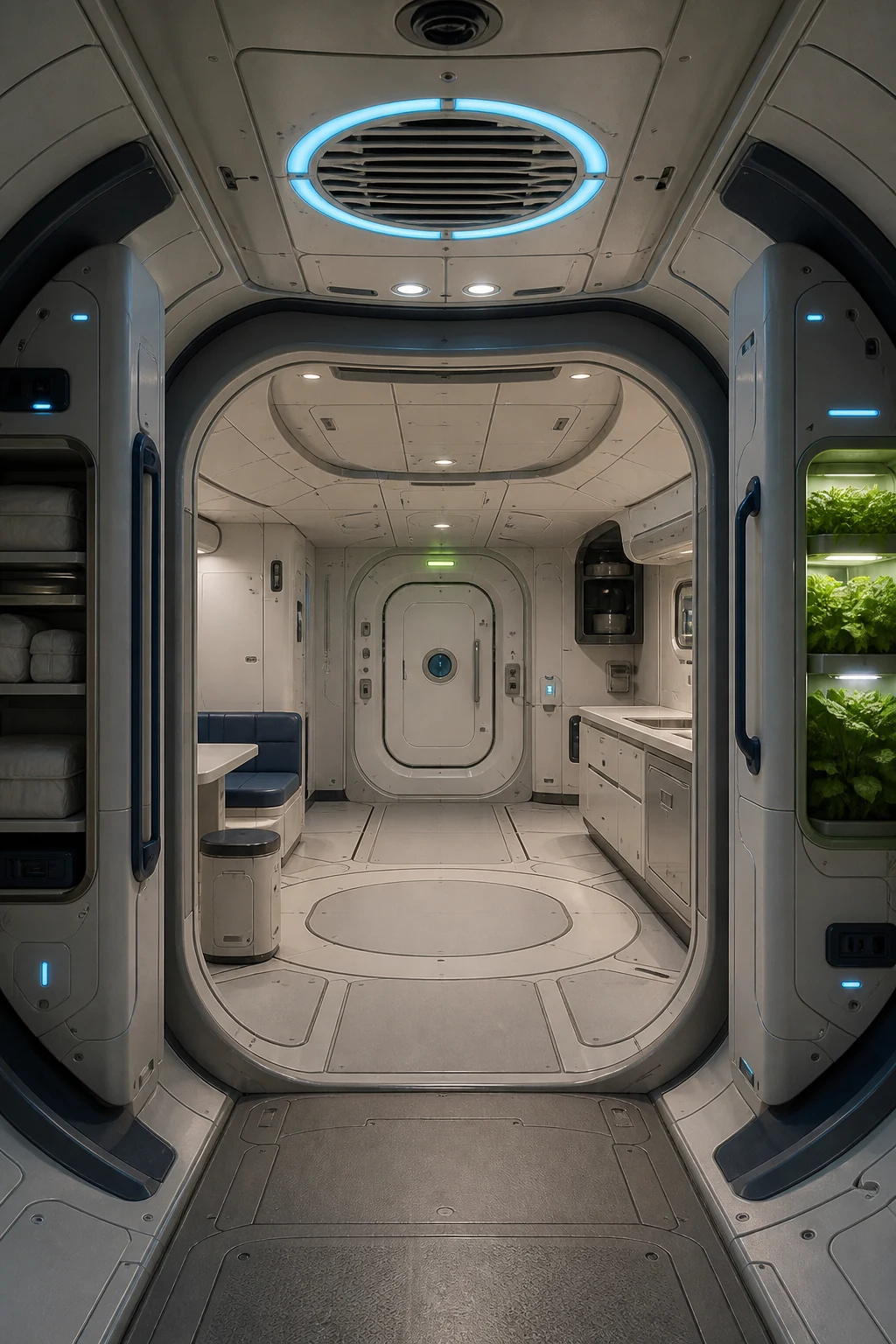 04
04