03 / Rock stays outside. People live inside walls and ceilings.
Rock stays outside. People live inside walls and ceilings.
03 / HABITABLE ARCHITECTURE
Rock stays outside. People live inside walls and ceilings.
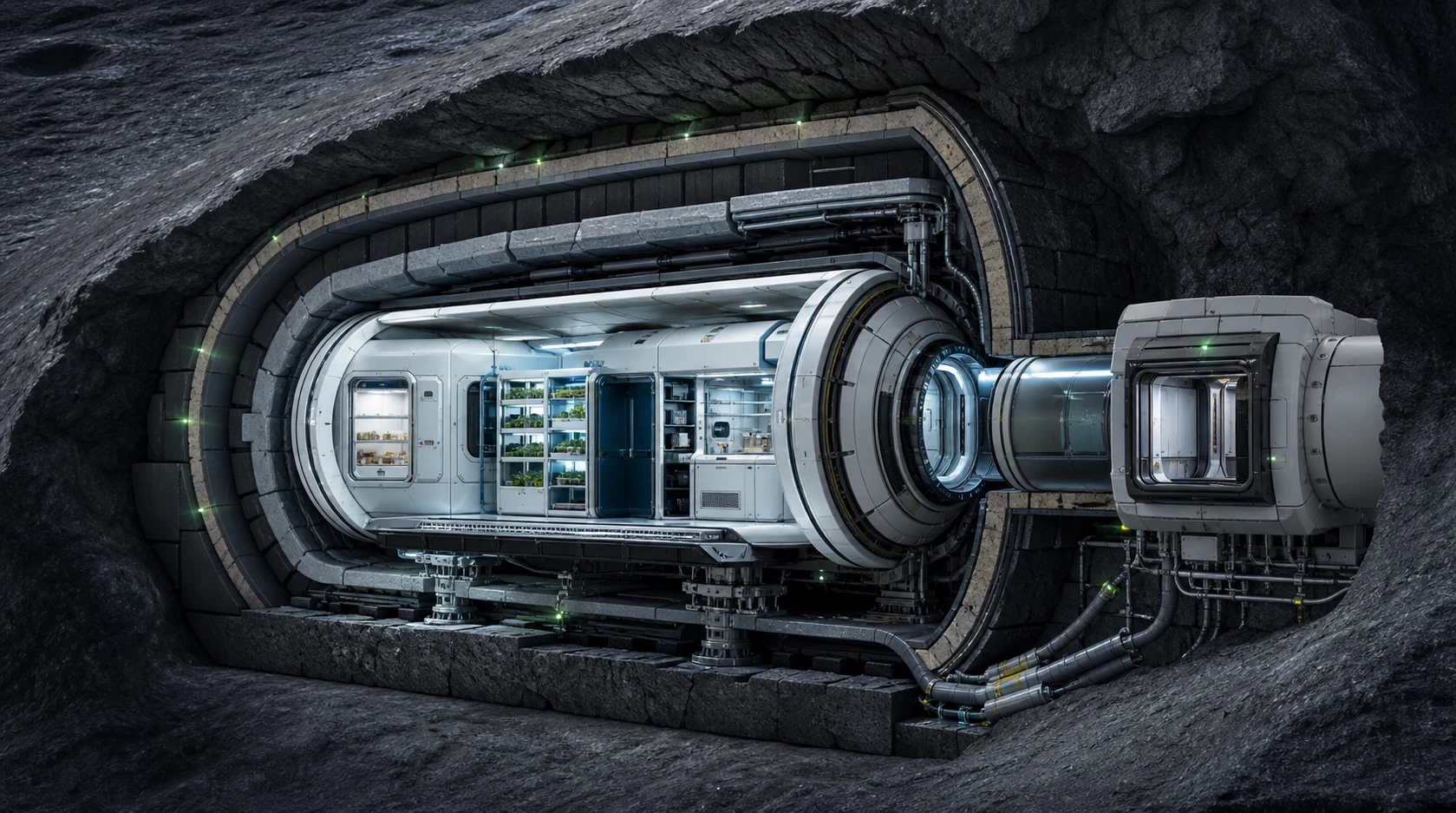
The lava tube is a natural shield, not an interior finish. Human spaces use maintainable composite panels, vaulted ceilings, airtight bulkheads and service spines. Natural geology remains a distant outer skin.
Rock provides shielding; the pressure shell provides architecture. An inspection and movement void separates them.
HABITABLE ARCHITECTURE / FIELD GUIDE
Build another city inside the cavern.
Marius Arc is made from three distinct layers: lunar rock, an independent pressure shell, and the interior surfaces people touch. Separating the protective outside from the habitable inside is what makes a city of 100,000 maintainable for generations.
16–24 mWIDTH OF THE CIVIC SPINE
2.7–3.2 mSTANDARD HOME CEILING
2 ROUTESEVACUATION DIRECTIONS
01
GEOLOGICAL ENVELOPE
Rock is protective clothing, not the city's ceiling.
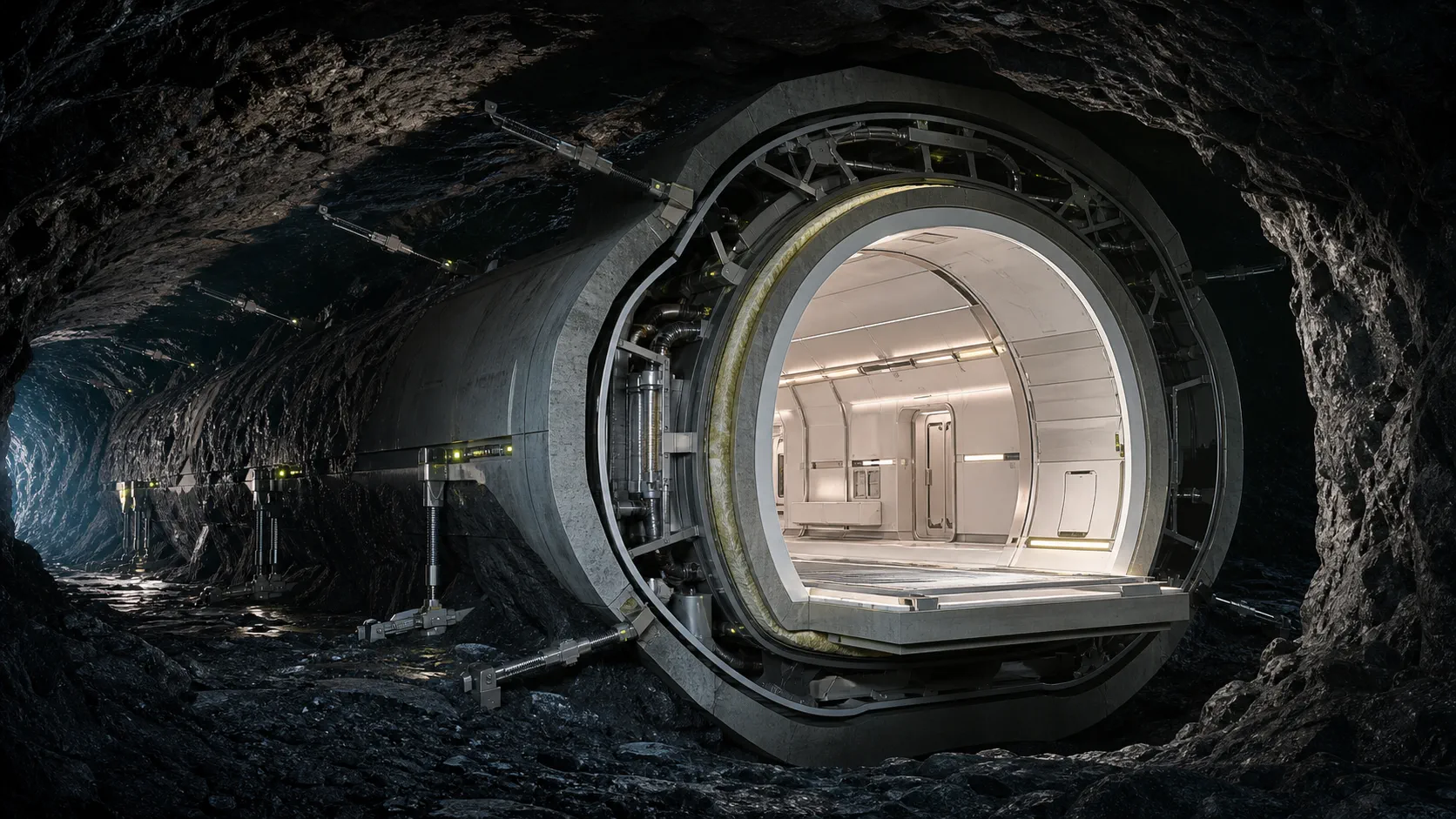
The lava tube acts as a geological envelope against radiation, micrometeorites and sharp temperature swings. Raw rock is never the wall or ceiling of an occupied room. An inspection void separates geology from architecture and continuously monitors movement, dust, moisture, gas and temperature.
Geology is not hidden; it is handled at a safe distance. Residents may see rock through sealed observation glazing, but that display remains outside the pressure boundary and never shares the city's air.
STRUCTURALLY SEPARATE ROCK FROM HABITAT
MONITOR THE ENVELOPE FROM SERVICE VOIDS
EXPOSE ROCK ONLY BEHIND SEALED GLAZING
02
PRESSURE SHELL
Streets and schools sit inside independent buildings.
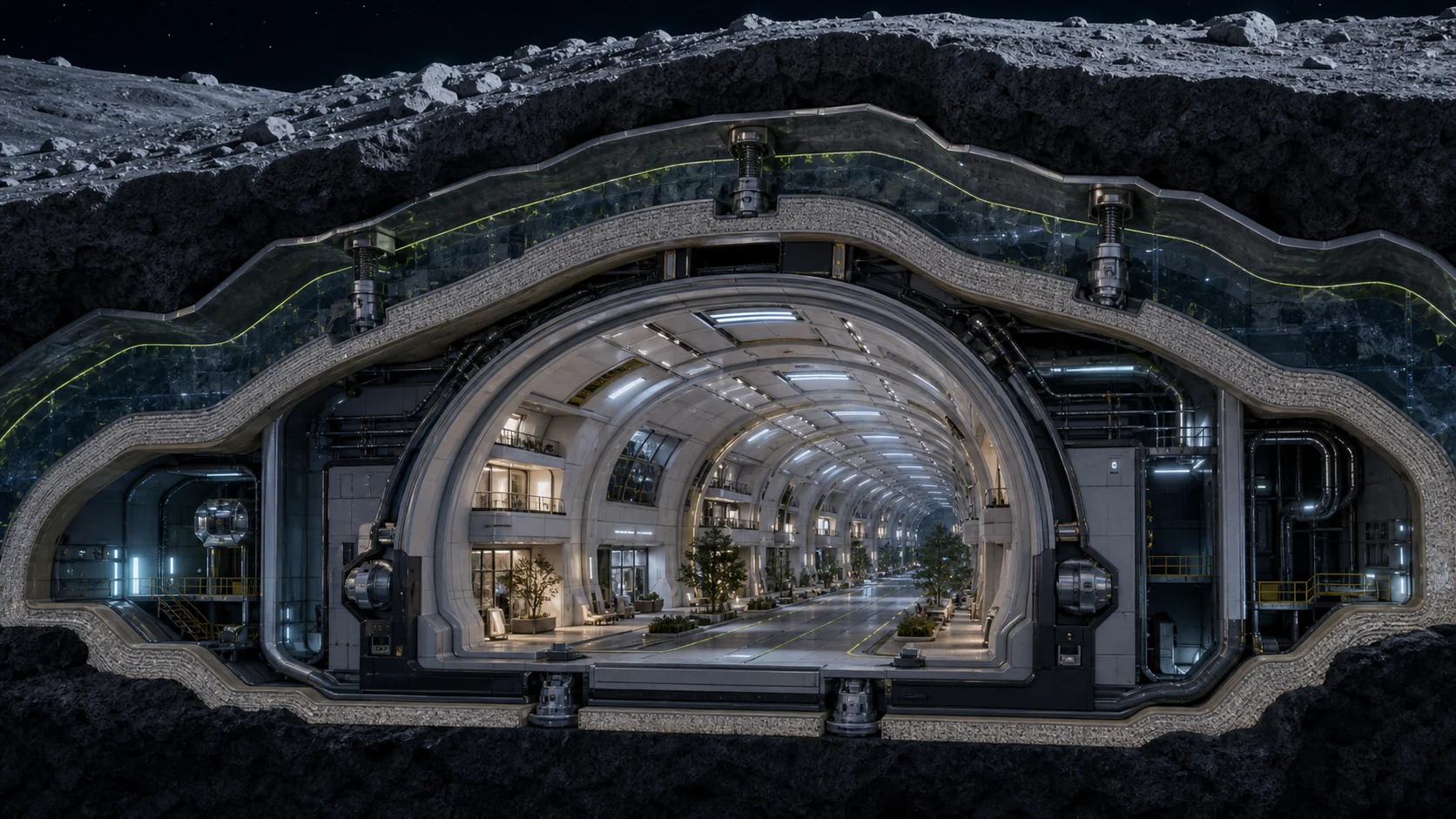
The city itself is a self-supporting pressure shell assembled inside the rock. Its civic spine is a 16–24 metre-wide vault with repeating ribs, lighting, ventilation and wayfinding bands. The rhythm makes position and distance legible along a street with no horizon.
Airtight bulkheads divide districts so a single incident can be isolated. Schools, clinics, shops and gardens branch from the spine along short routes; ordinary movement and emergency evacuation use the same familiar paths.
INDEPENDENT, REPLACEABLE PRESSURE SHELLS
BULKHEADS THAT ISOLATE ONE DISTRICT
OVERLAP DAILY AND EMERGENCY ROUTES
VISUAL FIELD NOTE
Streets and schools sit inside independent buildings.
03
ORDINARY HOME
A lunar home still contains mess, privacy and quiet.
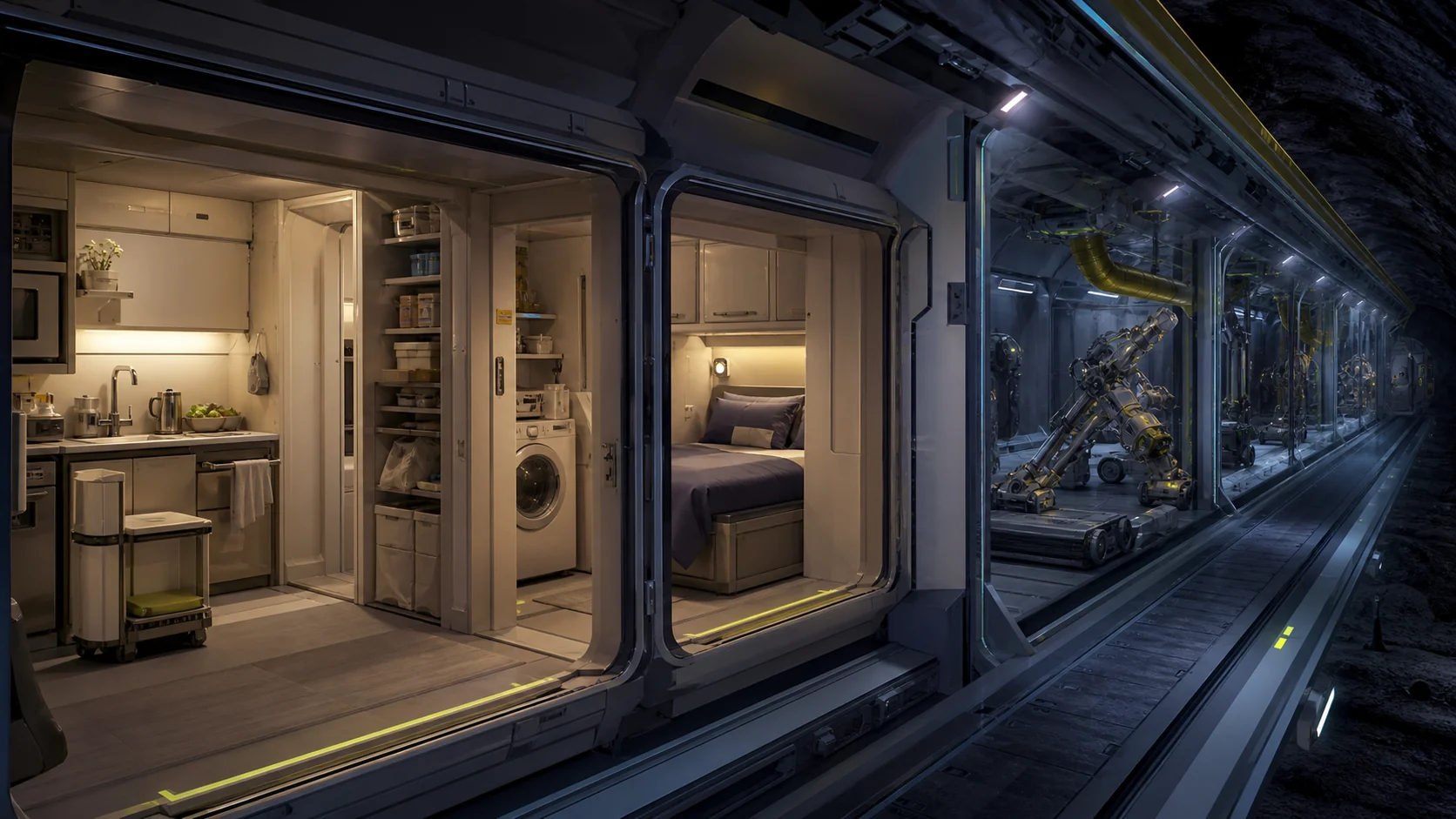
A home is not a spacecraft cabin. It has bedrooms, a kitchen, storage, laundry and room for remote work, with partitions that can change as a household changes. Shared kitchens, childcare, a clinic and a planted court sit nearby so domestic life is not carried alone.
Without exterior windows, ceiling light changes colour through the day. Views of Earth and the surface appear as deliberate media, not permanent fake skies. Bedrooms can become properly dark while shared rooms remain warm and social.
ADAPTABLE HOMES FOR CHANGING HOUSEHOLDS
SHARED SERVICES CLOSE TO THE FRONT DOOR
CIRCADIAN LIGHT WITH A REAL CHOICE OF DARKNESS
04
MAINTENANCE + SAFETY
Repair the city without turning homes into worksites.
Water, air, power and data run through service spines behind inhabited space. Technicians reach valves, cables and filters from maintenance corridors, completing most work without entering a home. Standard components let damaged sections be isolated and replaced.
Fire, decompression, smoke and utility failure are treated as different emergencies. Every district has two evacuation directions, independent power and short-duration air reserves; neighbouring districts become places of refuge. Safety comes from many small boundaries, not one heroic wall.
SEPARATE RESIDENT AND MAINTENANCE ROUTES
REPLACE STANDARD PARTS BY SECTION
PAIR TWO-WAY EVACUATION WITH MUTUAL AID
VISUAL FIELD NOTE
Repair the city without turning homes into worksites.